3 Reasons To Work With Corporate Optics For All Your Annual Meeting Logistics & Production Needs.

Chief Executive Officer
Annual meetings go off track when too many vendors split the work. For large U.S. companies, that risk is hard to ignore: 87% of S&P 100 annual meetings were in-person and 12% were hybrid, while teams using three or more production vendors report coordination problems in 67% of cases.
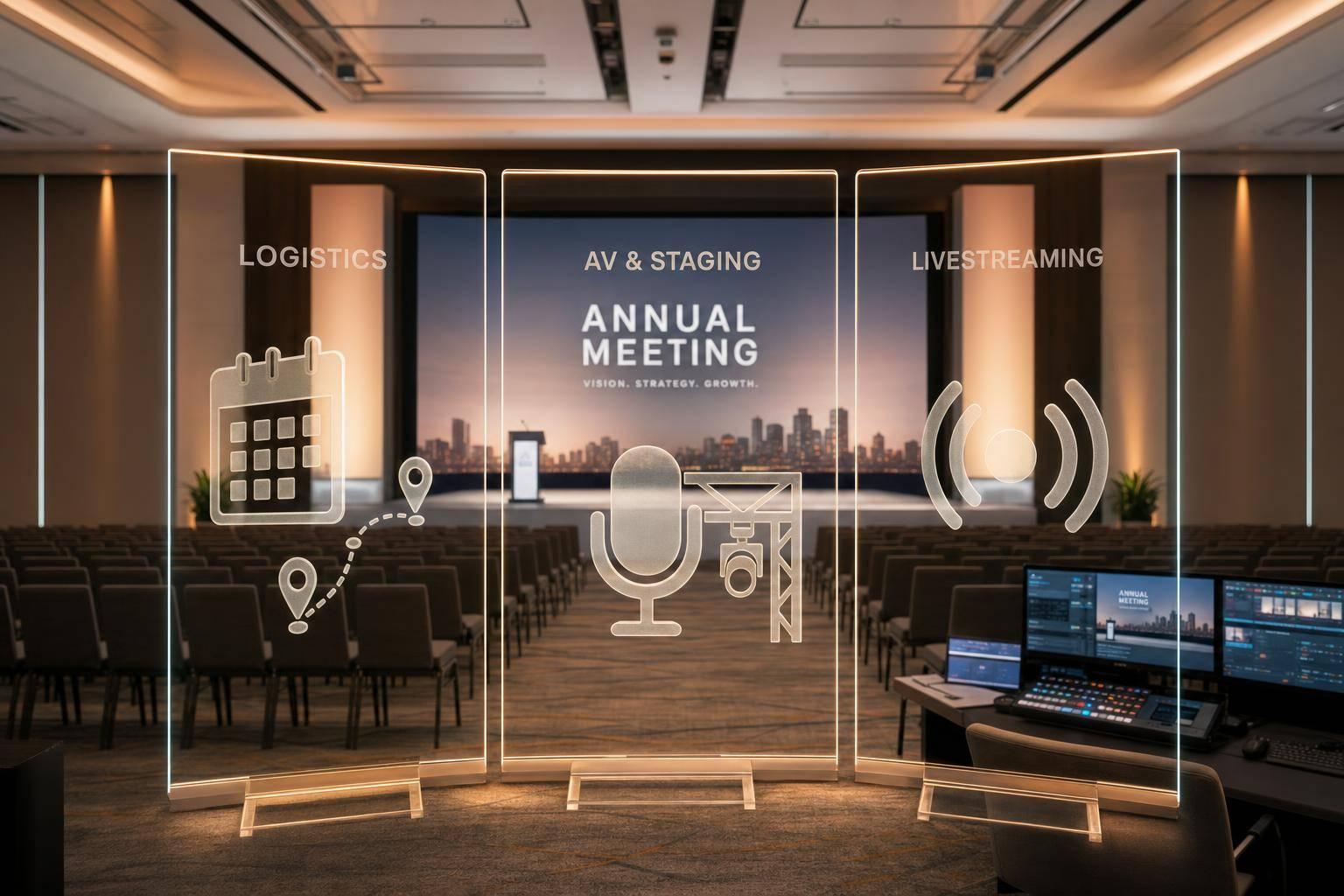
If I had to sum up the article in one line, it would be this: Corporate Optics puts logistics, AV, staging, livestreaming, and show-day support under one plan so internal teams can stay focused on leadership prep, shareholder messaging, and approvals.
Here’s the short version:
- One team handles planning and logistics from venue work to staffing, registration, rehearsals, and backup plans.
- One production setup runs the live show with AV, staging, slides, lighting, and cue timing managed together.
- One hybrid plan supports both audiences with livestream tools, moderated Q&A, failover support, polling, and post-event data.
That matters because annual meetings are not just room events anymore. You have to serve in-person attendees and remote viewers at the same time, and small mistakes can affect both. The article’s main point is simple: when one partner owns the full plan, there are fewer handoff issues, fewer last-minute problems, and a cleaner meeting from start to finish.
Why Annual Meetings Need One Production and Logistics Partner
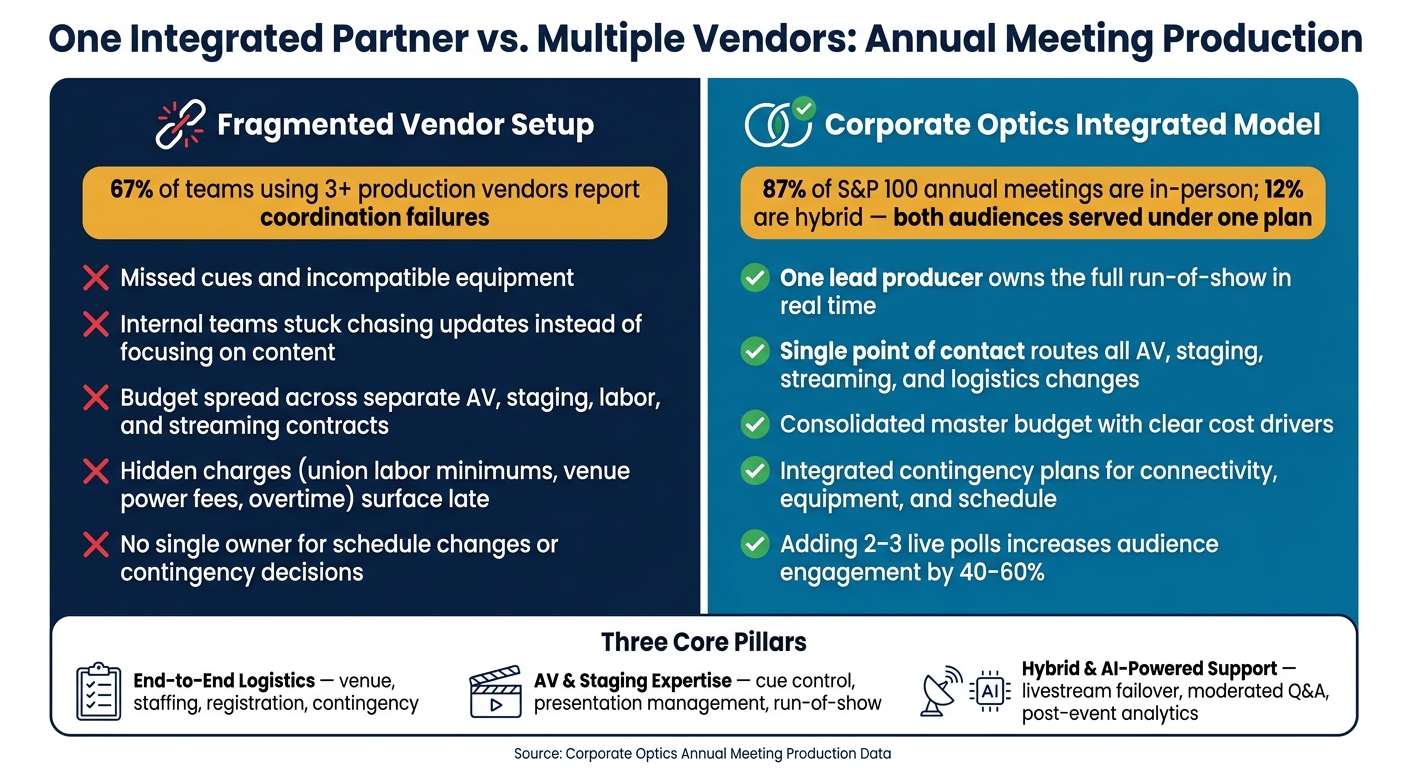
One Vendor vs. Multiple Vendors: Annual Meeting Production at a Glance
Most annual meeting issues don't start on show day. They start weeks before, when too many vendors are working from different timelines and no one has clear ownership.
That kind of split setup creates problems fast. Event planners using three or more production vendors report coordination failures in 67% of cases, including missed cues and incompatible equipment. In an annual meeting, that doesn't just hurt the in-room experience. It also hits the webcast.
Here’s what that looks like in practice: a speaker sends slides in the wrong format two hours before doors open, and the internal team suddenly becomes the main coordinator. They're chasing updates, sorting out schedule conflicts, and managing change orders across several contracts. Instead of focusing on executive prep, they're stuck putting out fires. This often happens when teams lack a structured checklist for on-site speaker support to manage last-minute changes.
Budget tracking gets messy too. When costs are spread across separate AV, staging, labor, and streaming contracts, total spend is hard to pin down until late in the planning cycle. Hidden charges - like union labor minimums, venue power fees, and overtime - often show up late. One integrated partner can roll those line items into a single master budget, which makes spend and approvals easier to manage, speeds up decisions, and cuts down on last-minute changes.
That’s why reliability comes first.
sbb-itb-ae35a94
1. Reliable End-to-End Annual Meeting Logistics
Corporate Optics handles annual meeting logistics from early planning to post-event wrap-up. That includes venue sourcing, vendor contracts, staffing, registration, and contingency planning. The upside is simple: schedules, approvals, and issue tracking stay in one place. Once the logistics are set, the next job is making sure the live show runs without missed cues.
You can see that in the agenda development process. Instead of handing clients a blank template and saying, “fill this out,” Corporate Optics works side by side with leadership to build a minute-by-minute run-of-show. That plan covers speaker transitions, AV cues, breaks, and Q&A timing. It also includes built-in buffers, which help protect key sessions when a speaker goes over time.
Onsite, a dedicated Optics team handles the moving parts so internal employees don’t get dragged into last-minute fixes. A show producer directs the event sequence. Stage managers coordinate speaker arrivals and slide transfers. Logistics leads manage registration, signage, and room transitions. In plain terms, the structure helps protect the brand while internal teams stay focused on company priorities.
Contingency planning starts on day one, not the night before the event. Corporate Optics flags early risk points like power, bandwidth, and speaker travel, then builds layered backup plans for each one. Pre-event walk-throughs and technical rehearsals help catch problems before attendees arrive. So if something goes sideways on show day, the response plan is already set. That logistics base only matters if the live show follows the same level of discipline.
2. Deep AV, Staging, and Run-of-Show Expertise
Once the logistics are set, Corporate Optics turns the meeting plan into a polished live production. For annual meetings, that usually means fewer cue mistakes, smoother speaker delivery, and a steadier message for shareholders. This is the point where AV, staging, and cue control shape whether the meeting feels smooth or tense.
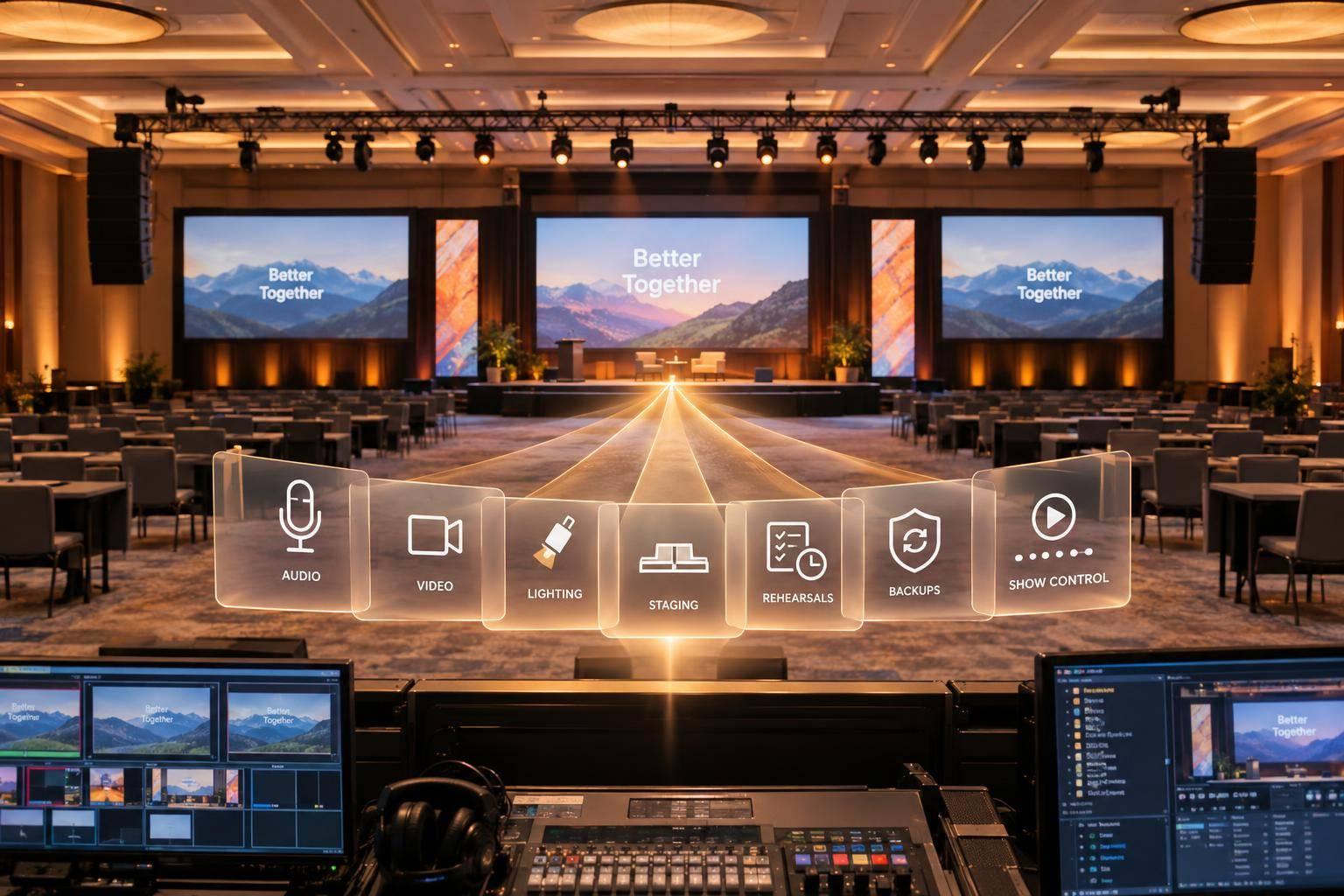
Corporate Optics builds the AV setup around the room itself. That includes audio modeling, speaker placement, microphone selection, LED or projection layouts, and confidence monitors so presenters can always see what’s next. Before load-in starts, the team already has equipment plots, cabling diagrams, and power plans mapped out. That prep work helps keep the message clear from load-in to close.
Stage and scenic design are built to fit the meeting’s goals, not pulled from a one-size-fits-all template. A town hall might need an open stage with easy Q&A access. An investor day might need a clean, brand-forward backdrop. Modular scenic pieces can shift between sessions without slowing the run-of-show, and lighting is set for both the in-room audience and the camera.
Presentation management is just as tight. Every deck and media file is gathered, versioned, and tested before show time. A presentation review room gives executives a place to check final slides and make last-minute edits, with updates synced to the main control systems before they step on stage. When content and cues line up, there’s no scramble at the last second. Operators in the control booth work from a cue-by-cue script tied straight to the run-of-show, so slide advances, video rolls, and lighting changes happen right on time.
Corporate Optics also provides teleprompters, confidence monitors, microphone coaching, and marked stage paths so executives stay in line with camera framing. The same tight control carries over to hybrid and livestream delivery.
3. Integrated Hybrid, Livestream, and AI-Powered Support
In annual meetings, the people in the room are only part of the audience. For shareholder meetings in particular, remote attendees can include investors, regulators, and media. That means the livestream and hybrid setup matters just as much as the in-person side. Corporate Optics follows hybrid meeting planning best practices by planning both together from the start instead of treating the webcast like a last-minute add-on.
The livestream setup begins well before show day. Corporate Optics picks the platform based on audience size, security, and compliance needs. Then the team adds backup encoders and internet failover, so there’s a safety net in place. Those hybrid safeguards help keep the remote feed steady even if the main connection runs into trouble.
Remote participation gets the same level of control as the room itself. Moderated Q&A queues, virtual green rooms for remote speakers, and clean handoffs help keep the agenda on track. An on-site producer screens live questions in real time and sends them to the moderator, so one audience isn’t stuck waiting for the other.
That kind of structure also makes interaction easier to manage. Research shows that adding just 2–3 live polls to a corporate broadcast can increase audience engagement by 40–60% compared with non-interactive streams. Corporate Optics plans for that early, with live polls available by QR code in the room and built right into the webcast for remote attendees.
AI also helps the team stay ahead of timing issues. These tools help shape the run-of-show, point out tight transitions, and track cue timing during the event. That live visibility cuts down on last-second scrambling and lets the crew focus on running the meeting instead of putting out fires.
After the meeting ends, Corporate Optics provides post-event analytics that cover:
- Total and unique viewers
- Entry and exit times
- Engagement by session
- Poll participation rates
- Q&A volume
- Geographic breakdowns
Clients use that data to cut sections with low engagement, give more time to high-interest Q&A, and sharpen next year’s format.
How Corporate Optics Simplifies Annual Meeting Execution
Annual meetings start to slip when logistics, AV, streaming, and staging are split across different teams. One group handles the room. Another handles the webcast. Someone else owns stage cues. Before long, internal teams are stuck chasing updates instead of focusing on content, approvals, and stakeholder messaging.
As a corporate meeting and event production company, Corporate Optics brings those moving parts into one plan. That means fewer handoff issues, less back-and-forth, and a much cleaner show day. When cues change at the last minute, or a speaker runs long, that kind of alignment matters. A lot. Every technical call and every timing shift needs to move together.
The table below shows how Corporate Optics keeps the decisions that matter most on show day under one plan.
| Annual Meeting Need | Corporate Optics Response |
|---|---|
| Run-of-Show Ownership | One lead producer owns the full schedule and updates every team in real time. |
| Single Point of Contact | One primary production contact routes all changes to AV, staging, streaming, and logistics internally. |
| Budget Control | A consolidated production budget with clear cost drivers keeps trade-offs managed centrally before they become overruns. |
| Contingency Planning | Integrated contingency plans cover connectivity, equipment, and schedule adjustments under one decision tree. |
| Rehearsal Coordination | A single integrated rehearsal schedule tests in-room and virtual elements together, with one production team running all cues end-to-end. |
| Livestream Consistency | AV, cameras, and streaming are coordinated under one plan, keeping audio and video consistent for both audiences. |
| Internal Team Role | Strategic owner - focused on stakeholders, content, and attendee experience while Corporate Optics handles onsite execution. |
This is what helps annual meeting logistics, production, and hybrid delivery work like one system instead of a patchwork. With planning centralized, costs stay visible, surprises are less likely, and internal teams get more time back for investor relations and executive prep.
Connecting Each Reason to Real Annual Meeting Needs
Each reason ties back to a core annual meeting pressure point: timing, execution, and remote access. Here’s how those upsides play out in the real world.
Logistics ties to keeping the agenda workable on-site. When Corporate Optics builds the production plan, following a proven process to plan a corporate conference, break lengths are set correctly and staffing lines up with peak traffic windows. That means the agenda fits the venue’s actual timing and staffing limits, not just what looks good on paper.
Production expertise ties straight to what executives need on show day. A CFO sharing financial results and a CEO taking live Q&A both need a setup that keeps them clear, steady, and on message. Rehearsals help spot missing audio, slide mistakes, and shaky transitions before the event starts.
Hybrid and AI-powered capabilities tie to a simple fact: annual meetings need to work for both audiences. Corporate Optics runs the remote experience so in-room and virtual attendees stay aligned. After the event, AI tools for managing corporate meetings can turn recordings into summaries and highlight clips, which makes recaps faster to put together.
The next step is looking at how this changes when planning gets split across vendors.
Conclusion
That’s why Corporate Optics’ integrated model stands out: professional production support, AV, run-of-show know-how, plus hybrid and AI-powered support all sit with one partner under one production plan.
When those pieces line up, show day runs cleaner. The audience experience feels stronger too.
The upside is pretty simple: fewer last-minute fire drills, less time spent chasing vendors, and a meeting that protects the message while easing the load on internal teams. For annual meetings that demand precision, speed, and accountability, Corporate Optics keeps every moving part under one plan.
FAQs
When should we start planning our annual meeting?
Start planning as early as you can. For many annual meetings, it helps to bring in a production and logistics partner 3–6 months ahead. For larger conferences, aim for 6–12 months.
If your meeting is smaller or lasts just one day, try to book at least 4–8 weeks in advance. That gives you a better shot at locking in the venue and staffing you need, while lowering delivery risk.
That extra lead time also makes room for the work people often underestimate: site surveys, AV feasibility checks, technical rehearsals, run-of-show coordination, and hybrid or livestream logistics.
What types of annual meetings can Corporate Optics support?
Corporate Optics supports a wide range of event formats, from single-day annual meetings to multi-day leadership conferences. They also run international annual meetings, high-security board meetings, and hybrid or virtual events.
Need to manage a large event with breakout rooms? They do that too.
Their team handles end-to-end production and on-site execution, covering the full process from planning through delivery.
How does Corporate Optics reduce show-day risks?
Corporate Optics cuts show-day risk with a clear process built around planning ahead and making sure the tech works when it needs to.
They start with infrastructure audits and technical rehearsals early in the process. That gives the team time to spot problems, fix weak points, and smooth out issues before anyone walks into the venue.
They also add backup layers where they matter most, including backup power, redundant signal paths, and duplicate critical equipment. If one part fails, there’s another ready to take over.
During the event, their crew keeps a close eye on systems in real time, holds settings steady across rooms, and manages transitions so the schedule stays on track.
Related Blog Posts
- End-To-End Annual Meeting Production Companies For Your Next Company Conference
- Leading Companies To Run An Annual Meeting
- Why Corporate Optics Is A Leading AV Production Team To Run An Annual Meeting Or Corporate Conference.
- In Need Of A Production Company With Creative Help? Why To Reach Out To Corporate Optics Today.


Streamline your workflow, achieve more

Lorem ipsum dolor sit amet, consectetur adipiscing elit. Maecenas ac velit pellentesque, feugiat justo sed, aliquet felis.



Lorem ipsum dolor sit amet, consectetur adipiscing elit. Maecenas ac velit pellentesque, feugiat justo sed, aliquet felis.