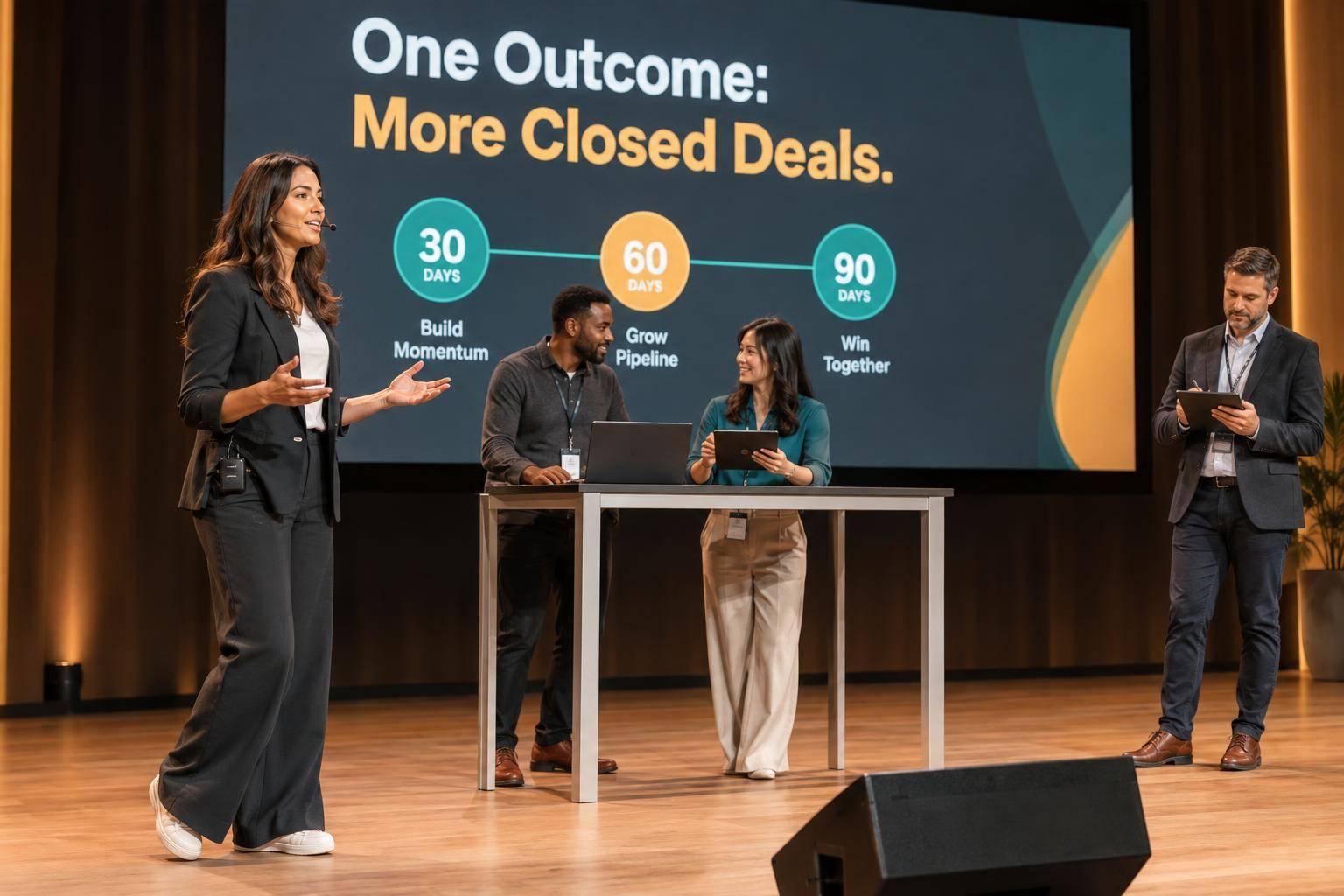
7 Reasons To Work With Corporate Optics For Full-Service Production For Your Corporate Annual Meeting.

Chief Executive Officer
If your annual meeting has to run cleanly, one production team is often the safer choice. From planning and staging to livestreaming, rehearsals, onsite support, and post-event reporting, this article lays out 7 clear reasons companies turn to Corporate Optics for high-pressure meetings.
Here’s the short version: I’d pick a full-service partner when I want fewer vendor handoffs, tighter show control, stronger hybrid support, and one team accountable from start to finish. That matters even more when the event includes executive remarks, shareholder voting, legal review, or remote attendees.
The article covers these seven points:
- Program management from planning through show call
- One team for AV, scenic, lighting, and staging
- Broadcast-level livestreaming for hybrid meetings
- Executive rehearsal and speaker support
- AI-assisted agenda planning and post-event analytics
- Vendor coordination and onsite technical support
- Past work on high-pressure corporate events
Event A/V Essentials Part 5: Creating Your Onsite Production Schedule - Logan Clements
sbb-itb-ae35a94
Quick Comparison
| Reason | What it helps with | Why it matters for annual meetings |
|---|---|---|
| Program management | One owner across planning and live show | Fewer missed details |
| AV, lighting, scenic, staging | One crew runs the room setup | Less confusion between vendors |
| Livestreaming and hybrid meetings | Stream, voting, and remote access | Better experience for online attendees |
| Executive support | Rehearsals, scripts, teleprompters | Leaders stay prepared and on message |
| AI planning and analytics | Agenda pacing and post-event data | Better planning and reporting |
| Logistics and onsite support | Schedules, load-in, vendor handling | Smoother execution on event day |
| Past event experience | Experience with board-level and shareholder events | Lower risk during high-pressure moments |
One detail stands out: the article points to 20+ years of experience, an Emmy Award, an MPI Global Paragon Award, and a 2026 hybrid town hall for nearly 750 employees. Put simply, the case for Corporate Optics is about control, reduced risk, and a polished meeting from opening remarks to final archive.
What Full-Service Production Covers for a Corporate Annual Meeting
In practice, full-service production for an annual meeting covers the whole process. The goal is simple: reduce risk, cut down on handoffs, and give planners tighter control from the first planning call to the final deliverable.
It starts with planning. The production team builds a detailed run-of-show that maps every segment, cue, speaker, and media asset so the meeting stays on schedule. For a full-day program, that usually means placing financial updates at the right agenda moments, sequencing CEO and CFO remarks for maximum impact, managing shareholder voting, and setting aside time for Q&A.
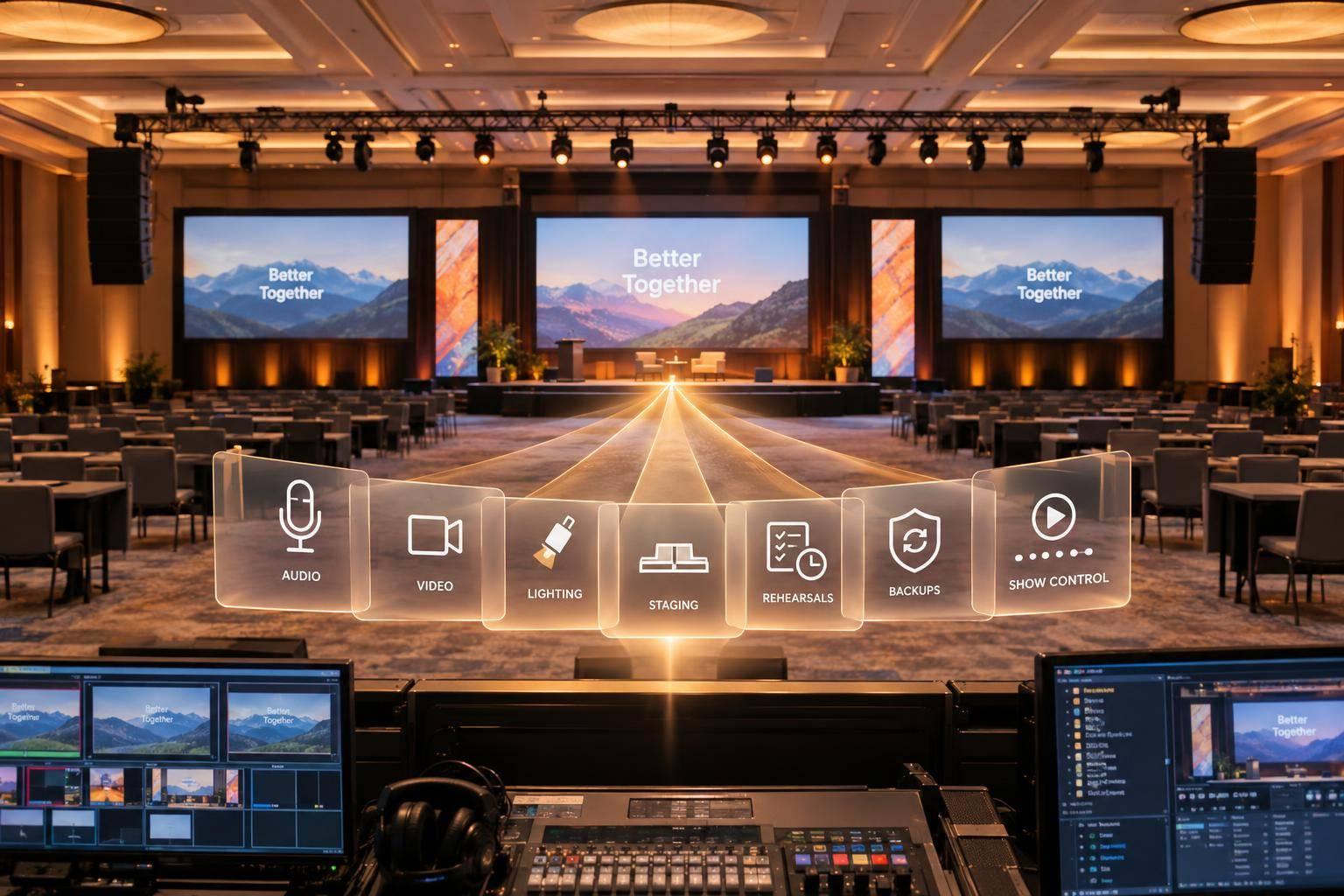
On the technical side, full-service production brings AV, scenic, lighting, and staging together as one coordinated system. That can include:
- Audio
- LED walls
- Confidence monitors
- Teleprompters
- Lighting built for both the in-room audience and the cameras
That same all-in-one setup also applies to hybrid attendance. Broadcast-quality livestreaming for remote attendees calls for multi-camera switching, a separate audio mix for the stream, secure access links, and redundant encoders to help guard against outages during key disclosures. Moderated Q&A and online polling can also be built into the run-of-show, so virtual attendees aren't treated like an afterthought.
After the event, the work doesn't just stop. Post-event deliverables often include edited recordings, attendance reports, interaction data, incident logs, and a dated archive of production assets. Those materials can support legal, finance, and investor relations teams after the meeting wraps up. That's why the first reason - program management from pre-production through show call - matters so much.
1. Program Management From Pre-Production Through Show Call
Most annual meeting issues don’t begin on show day. They start weeks earlier, when ownership is split across teams and key details fall through the cracks. Corporate Optics keeps pre-production and show call under one roof, which gives planners one accountable team, fewer handoffs, and tighter control.
That control starts with single-point ownership from pre-production through show call. The team builds the agenda around business priorities, pacing, and message clarity. In plain terms, the event is shaped around business goals and audience clarity, not some off-the-shelf event template. That same control carries into rehearsals, where every cue is locked before show day.
Before a single attendee walks in, the Corporate Optics team runs cue-by-cue rehearsals to line up every show element in advance. Those rehearsals lock timing and cut show-day risk, while giving executives the support they need and keeping the message under control from start to finish.
For annual and shareholder meetings, Corporate Optics also uses secure AV protocols to protect sensitive board and financial information during high-risk moments like executive remarks and shareholder votes.
That same discipline shows up in the technical setup, which is a core part of planning your corporate event with professional production support, where AV, scenic, lighting, and staging have to work as one system.
2. AV, Scenic, Lighting, and Staging Handled by One Team
Corporate Optics handles AV, scenic design, lighting, and staging as one connected production system. That setup cuts down on handoff mistakes, mismatched cues, and communication gaps before the annual meeting starts. It also matters when remote attendees need the same polished experience as people in the room.
In pre-production, this unified setup means the room layout, stage design, audio plan, and lighting looks are built together. Power, sightlines, screen placement, display specs, and mic coverage all get mapped out at the same time. That makes the plan tighter and helps the pieces work together from the start.
During load-in, one crew manages rigging, set builds, audio deployment, and lighting hangs in the right sequence. That helps trim downtime and keeps the venue safer while the show comes together.
During the event itself, one show caller and technical director can cue slides, lighting, audio, cameras, and stage movement in real time. In the general session, that means speakers are well lit, easy to hear, and framed the right way for both in-room and remote audiences. That holds whether the moment is a CEO address, a shareholder vote, or a live Q&A.
For high-stakes moments like earnings calls, leadership changes, or shareholder Q&A, unified control makes it easier to match the right visual and audio treatment to each segment. And when the meeting is streamed, that tight coordination matters even more.
3. Broadcast-Quality Livestreaming and Hybrid Meeting Execution
Once the room is built and the show is cued, the stream needs to follow best practices for conference event production to run with the same level of precision.
Poor stream quality can hurt confidence in the meeting and spark governance concerns. In an annual meeting, that matters fast. Shareholders need to hear the message clearly, vote in a secure way, and stay engaged no matter where they join from. Corporate Optics plans livestream and hybrid execution around broadcast-quality standards, so remote shareholders get a clear, steady experience that lines up with what people in the room see.
That setup includes multi-camera coverage, clear audio from lavalier and podium mics, graphics and lower-thirds for speakers and agenda cues, redundant encoders, and separate internet paths. The stream can also feed in-room screens.
Hybrid execution works best when both audiences follow the same agenda. Slides need to fit both projection and streaming layouts. Q&A needs to be moderated so remote shareholders can submit questions and hear answers without confusion. Secure voting tools can also be built into the webcast with authentication and confirmation flows that support governance and compliance needs.
Before the event goes live, the team rehearses the webcast, voting, and Q&A under live conditions. Venue bandwidth, backup systems, and failover procedures are checked ahead of time.
During the meeting, a dedicated stream producer watches audio, video, and stream stability in real time. If something goes wrong, preset escalation paths and fallback options help keep the meeting moving.
That level of control keeps remote and in-room audiences in sync, which sets up the speaker and rehearsal work that follows.
4. Executive Speaker Support, Rehearsals, and Run-of-Show Control
Once the room, stream, and tech setup are in sync, executive delivery needs the same level of care. Even a well-produced event can fall flat if leaders aren't ready or timing starts to drift.
Corporate Optics gets executives ready with script support, teleprompter setup, and focused coaching before show day. Then it pulls scripts, media, and slide cues into a single run-of-show. That prep helps executives sound polished, stay on message, and hold the audience's attention on the business story, whether the moment involves a financial disclosure, a leadership remark, or shareholder-facing content.
During the event, Corporate Optics calls cues, handles transitions, and adjusts the run-of-show in real time to keep executive messaging on track. The result is simple: faster resets, smoother handoffs between speakers, and fewer onstage mistakes. Onsite control helps keep business-critical messaging where it needs to be.
When every minute on stage counts, that kind of control keeps the message clear.
5. AI-Enabled Agenda Planning and Post-Event Analytics
Through its partnership with prompts.ai, led by Founder and CEO Steven Simmons, Corporate Optics uses AI to tighten agendas and measure event results.
Once the run-of-show is locked, AI helps fine-tune pacing and show what worked. These tools speed up pre-production by spotting ways to cut costs and shaping the agenda around the moments most likely to hold audience attention. That level of precision matters. When timing and pacing are off, audience focus can slip fast.
After the meeting, Corporate Optics delivers post-event analytics tied to messaging retention and audience engagement. Planners and executives get a clear view of what landed, what held attention, and where engagement started to drop. That shifts post-event reporting from a routine recap into a practical planning tool.
With those insights, planners can adjust pacing, improve engagement, and make smarter choices for the next agenda.
6. End-to-End Logistics, Vendor Coordination, and Onsite Technical Support
Once the agenda and cues are locked in, the next part is simple to describe and hard to do well: execution comes down to disciplined logistics. Corporate Optics serves as the single production point of contact for vendor coordination and onsite logistics. That means internal teams can avoid handoff errors, get cleaner execution, and cut risk during shareholder-facing moments.
From the first site visit through load-out, Corporate Optics manages the master production schedule. That includes venue assessments, technical specs, room diagrams, shipping timelines, load-in plans, load-out, and return shipping. With every vendor working from the same plan, it becomes much easier to keep the meeting on track when changes pop up, whether that’s a delayed staging element or a last-minute speaker deck update.
Onsite, Corporate Optics puts together a right-sized technical team based on the meeting’s needs. A technical director leads the production, with audio, video, lighting, and streaming support added as needed. A stage manager keeps speaker flow and cues moving in real time, and hybrid meetings can also include a streaming or broadcast engineer focused on the webcast experience.
That setup matters for one reason: each system has a clear owner. When something goes wrong, there’s no confusion about who steps in. Issues get resolved faster, and the room stays steady even when the schedule gets tight. The same applies to hybrid events, where the in-room experience and webcast both need close attention at the same time.
If a remote presenter loses connection, the team can switch to a backup path or adjust the program flow. That helps keep the meeting on schedule and gives planners a fast fallback right when they need it most.
7. Proven Track Record With High-Stakes Corporate and Shareholder Events
Corporate Optics has deep experience with corporate and shareholder events. That gives the team a clear read on what can go wrong, so they can spot issues early and handle tough logistics before they turn into show-day problems.
Recent work shows what that looks like in practice. For the Hilb Group 2026 National Leadership Meeting at The Ritz-Carlton and JW Marriott Orlando, Corporate Optics worked as the full-production partner. The team handled general sessions, breakout rooms, scenic and lighting design, and full program recording. That kind of support matters when an event needs to work smoothly for executives, shareholders, and remote attendees all at once.
When the program includes board-level discussions or financial disclosures, Corporate Optics follows secure AV protocols to protect confidential corporate information. That’s a direct plus of working with a team that has managed sensitive, high-visibility events under close scrutiny.
The result is simple: fewer surprises, cleaner execution, and tighter control on show day.
Full-Service Benefits at a Glance

Full-Service vs. Multi-Vendor Production: 7 Reasons to Choose One Team for Your Corporate Annual Meeting
After the seven reasons above, this table makes the full timeline easier to see. Full-service production isn't a single job. It's a connected chain of planning, live delivery, and post-event support.
| Phase | Service Area | What Corporate Optics Handles | Client Benefit |
|---|---|---|---|
| Pre-Event | Strategic Planning & AI Agenda Design | AI-supported agenda design, run-of-show planning, and venue review | Tighter budget control and an agenda built for audience focus |
| Pre-Event | AV setup best practices, Scenic & Staging Design | Stage, lighting, rigging, and scenic design aligned to the brand | One technical plan across all visual elements with a polished stage look |
| Pre-Event | Executive Rehearsal Coordination | Teleprompter setup, podium practice, walk-on cues, and mic technique | Executives arrive prepared and confident on show day |
| During Event | Show Call & Live Execution | Live cueing, camera switching, mic handoffs, and timing control | A polished program flow with minimal onstage disruptions |
| During Event | Hybrid & Livestream Delivery | Broadcast-quality encoding, redundant signal feeds, caption integration, and platform access control | Remote shareholders follow the program clearly and securely |
| During Event | Onsite Technical Support | Audio engineers, video techs, lighting operators, and stagehands from load-in through tear-down | Rapid response to deck changes, mic issues, or speaker substitutions |
| Post-Event | Analytics & Content Archiving | Viewership data, engagement summaries, edited recordings, and highlight reels | Clear data on what resonated, plus content ready for investor relations or internal communications |
Look at the flow from top to bottom and the value becomes plain: the same team helps shape the agenda, builds the room, supports leadership, runs the live show, manages the stream, fixes issues on the fly, and then turns the event into usable content afterward. That kind of continuity cuts confusion and keeps the meeting on track.
Why These Seven Reasons Matter to Annual Meeting Planners
Annual meeting planners answer to boards, executives, legal teams, investors, and communications leads. Every call is out in the open. That means planner credibility depends on a show that feels controlled and polished from start to finish. So the production details above don't just matter to the AV crew. They matter directly to the people leading the meeting.
The biggest upside of working with one full-service production partner is simple: it protects your attention. When Corporate Optics runs the full production chain - from crew and gear to cues and backup plans - internal teams can stay focused on messaging, investor expectations, and leadership support.
And when something goes wrong, the value gets even clearer. A dropped stream, frozen slides, or a last-minute speaker change can turn into a mess fast. Without one owner, fixes get split across vendors and teams. A full-service partner closes that gap. For planners who may need to explain failures to the board, having one escalation path instead of several can make a stressful moment far easier to manage.
Hybrid is now a core format, which makes unified production a must. Hybrid events bring more moving parts, and more moving parts mean more risk unless one team owns both the room and the broadcast. That same shared control that helps protect the live stream also makes post-event reporting cleaner.
Post-event data matters too. Those metrics help planners report results, justify budget, and shape the next annual meeting. They also give planners a clear record of what happened and why it mattered.
Conclusion
Annual meetings put leadership trust and shareholder confidence on the line. Basic AV can set up screens and speakers. But it can't safeguard a CEO's opening remarks, run a hybrid Q&A without friction, or give you useful engagement data once the event ends.
That's the gap full-service production covers.
Corporate Optics handles that gap with one team managing planning, AV, staging, streaming, rehearsals, show calling, and analytics under one command structure. Fewer handoffs means tighter control from start to finish.
That’s why the right production partner matters from the very first planning call. If your annual meeting needs to go well, bring in a full-service production partner early.
FAQs
How early should we bring in Corporate Optics?
Ideally, bring in Corporate Optics 3 to 6 months before your event. That gives the team enough time for site surveys, technical checks, and detailed production planning. It also helps surface challenges early and spot places where you can save money.
If you’re planning a large-scale event or a complex annual meeting, it’s smart to start even earlier. Bringing Corporate Optics in ahead of time also makes it easier to line up every piece of the event - from stage design to hybrid integration - with your goals.
What kinds of annual meetings are the best fit?
Corporate Optics works best for high-stakes corporate meetings where there’s little room for error and every detail needs to land cleanly. That includes executive town halls, shareholder meetings, leadership conferences, and sensitive board meetings.
It’s a strong fit for hybrid or virtual events, too. When teams need steady messaging, polished production, and a smooth experience for both in-person and remote audiences, Corporate Optics can handle the full job as a single end-to-end production partner.
What post-event deliverables can we expect?
After your event, you can expect post-event reporting tied to the goals you set at the start. That usually includes analytics on attendee engagement, participation, session attendance, and interaction data such as live polls, Q&A activity, and social media engagement.
You’ll also get technical performance reports, along with summaries of attendee feedback, content performance, and sponsor impact. Put together, these reports help you measure your Return on Event (ROE) and shape smarter meeting plans going forward.
Related Blog Posts
- Best Companies for Large-Scale Corporate Meeting Production
- Leading Companies To Run An Annual Meeting
- Why Corporate Optics Is A Leading AV Production Team To Run An Annual Meeting Or Corporate Conference.
- 3 Reasons To Work With Corporate Optics For All Your Annual Meeting Logistics & Production Needs.



Streamline your workflow, achieve more

Lorem ipsum dolor sit amet, consectetur adipiscing elit. Maecenas ac velit pellentesque, feugiat justo sed, aliquet felis.



Lorem ipsum dolor sit amet, consectetur adipiscing elit. Maecenas ac velit pellentesque, feugiat justo sed, aliquet felis.